High-quality materials from biogenic waste
Young researchers at TU Bergakademie Freiberg want to develop functional membranes, coatings and packaging from agricultural waste materials.

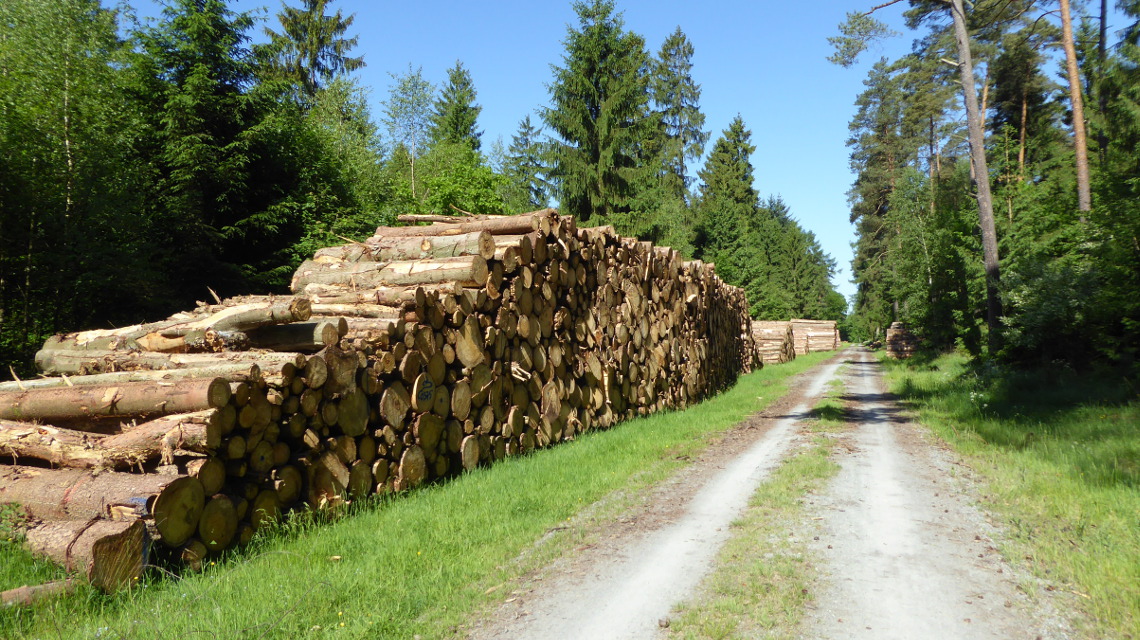
Fruit pomace, rapeseed straw and potato peelings are usually used in animal feed. For the bioeconomy, however, these residues have long been valuable raw materials that can be used both materially and energetically. In the BIOWIN project, young researchers at the TU Bergakademie Freiberg want to upgrade these biogenic residues from agriculture and forestry, which have been insufficiently utilised in Saxony to date, and transform them into innovative, polymer-based materials.
Complete utilisation of biomass
To this end, the interdisciplinary team is focusing on three manufacturing processes in which fibres in the micrometre or nanometre range and defined layers can be obtained – specifically electrospinning, wet spinning and spray coating. To this end, the residues are broken down into their components using sustainable mechanical processes and green solvents and then recombined for specific applications. ‘Ultimately, we want to utilise as much as possible from the complex structure of biomass and use green chemistry with sustainable processes to do so,’ explains Vanessa Castro, head of the junior research group.
Economic and sustainability analysis of the products
In addition to manufacturing innovative products such as nanofibres from fruit or packaging from potatoes, the BIOWIN team will also examine whether Saxon companies can use the new materials in an economically and ecologically sensible way. ‘The practical work in the laboratory will be combined with a detailed economic and sustainability analysis,’ says Castro. To this end, the group is developing an evaluation model and a database that provides simulations and potential analyses for partners from research and industry.
Strengthening innovative power in Saxony
The Freiberg junior research group is convinced that interdisciplinary cooperation enables ‘scalable upcycling processes along circular value chains’ and thus strengthens ‘innovative capacity in Saxony’.
bb
You might also like
Cell-free biotech production